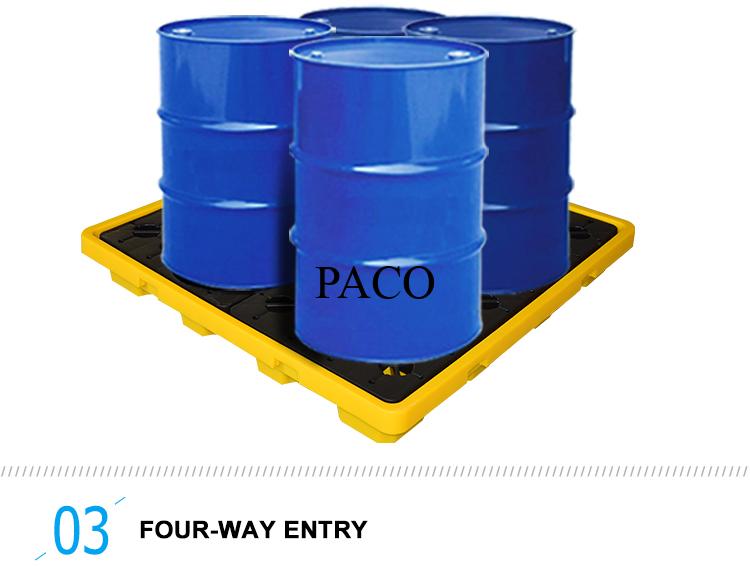
Hazardous liquids, chemicals, and oils create serious risks the moment a storage drum starts to leak — contaminated soil, polluted waterways, workplace injuries, and regulatory penalties that can run into the millions. For manufacturing plants, chemical processing sites, warehouses, and oil & gas facilities across Malaysia, a 4 drum spill containment pallet is one of the most practical ways to stop a leak before it becomes an incident.
Fuka Industries supplies 4 drum spill containment pallets built to hold four 200-litre drums on a single HDPE platform, giving facilities an affordable, code-ready way to store multiple drums while keeping any spill fully contained. With Malaysia's DOE eSWIS V2 rollout tightening scheduled waste compliance, and the Environmental Quality Act 1974 and USECHH Regulations 2000 already requiring secondary containment for hazardous substances, having the right spill pallet in place isn't just good practice — it's how facilities stay audit-ready.
This guide covers what a 4 drum spill containment pallet is built to do, the features that matter most when choosing one, and how to select and maintain a unit that fits your storage environment.
01What Is a 4 Drum Spill Containment Pallet?
A 4 drum spill containment pallet works through a raised, removable grating platform sitting above a built-in sump — any liquid that escapes a drum falls through the grating and collects below instead of spreading across the floor. Fuka's sump holds up to 260 litres and includes a drain, so operators can empty accumulated liquid on their own schedule rather than scrambling mid-spill.
A well-built unit typically includes:
- 1A raised platform sized for four drums
- 2An integrated containment sump (260L on Fuka's model)
- 3A removable grating panel for easy cleaning and inspection
- 4A drain outlet for controlled liquid removal
- 5UV- and corrosion-resistant construction for outdoor use
One clarification worth knowing before you buy: these are static containment units. Drums should be removed before the pallet itself is moved by forklift — not every "forklift-compatible" spill pallet on the market is rated for loaded transport, so it's worth confirming with your supplier.
02Why Spill Containment Is Important in Malaysia
In June 2026, a chemical tank leaked at a Pasir Gudang factory and a hydrochloric acid tanker spilled near Sungai Cherating — both triggered DOE and hazmat response within hours. These aren't rare events, and the cost of getting caught without containment just went up.
The Environmental Quality (Amendment) Act 2024 sets penalties starting at RM10 million for non-compliance.
"It catches leaks before they hit the floor, and it's exactly what a DOE inspector wants to see on-site — not a cleanup plan, but containment already in place."
03Key Features of a 4 Drum Spill Containment Pallet
Seven features define a well-built 4 drum spill containment pallet:
- 1Containment sumpHolds up to 260 litres, above the 220–250L range typical of standard models.
- 2Chemical resistanceHDPE withstands acids, alkalis, solvents, and petroleum products without rusting or pitting.
- 3Load capacitySupports 1,200–1,500kg, enough for four filled 200-litre drums at 200–300kg each.
- 4Removable gratingLifts out for fast cleaning and sump inspection between uses.
- 5Static handlingBuilt for stationary containment; move the pallet empty, not loaded with drums.
- 6UV resistanceStabilized polyethylene holds up to Malaysia's outdoor heat and sunlight without cracking or fading.
- 7Climate durabilityCompared to metal alternatives, HDPE holds up better against Malaysia's humid, tropical conditions without the rust risk.
04Benefits of Using a 4 Drum Spill Containment Pallet
Fewer Slip Hazards
Chemical leaks contained at the source keep floors and walkways clear for workers.
Lower Cleanup Costs
A contained spill stays in the sump instead of spreading, cutting decontamination and disposal costs.
Less Downtime
Staff can clear a contained spill without shutting down the surrounding work area.
Longer Service Life
HDPE construction holds up for years with minimal upkeep, so the pallet earns back its cost well past the first spill it catches.
05Industries That Use a 4 Drum Spill Containment Pallet in Malaysia
- Chemical & Petrochemical PlantsPasir Gudang, Gebeng, Port Klang — procurement here typically runs through formal vendor licensing and tender (e.g. PETRONAS's registration and GEP SMART tender process), so audit-ready documentation matters as much as the containment unit itself.
- Manufacturing & WorkshopsKlang Valley, Shah Alam, Puchong — store lubricants, solvents, and cleaning chemicals as part of routine operations.
- Warehousing & Logistics OperatorsIncreasingly relevant given the 16.6M sq ft of new Klang Valley logistics space coming online 2026–2028.
- Petrol Stations & Fuel Handling SitesStore diesel and lubricants where containment doubles as fire-hazard mitigation.
- Automotive WorkshopsEngine oil, brake fluid, and coolant in daily maintenance work.
06Common Chemicals Stored on a 4 Drum Spill Containment Pallet
Most routine industrial liquids are compatible with an HDPE spill containment pallet — engine and hydraulic oils, diesel and petrol, common acids and alkalis, solvents, coolants, and cleaning agents.
Exception to check: highly concentrated or specialty chemicals are the exception — always confirm compatibility with your supplier before storing anything outside everyday oils, fuels, and general-purpose solvents.
07Indoor vs Outdoor Placement
Chemical storage rooms, production floors, maintenance workshops — a spill pallet benefits from easier monitoring and tighter housekeeping since it's part of the regular walkthrough.
Tank farms, chemical yards, loading bays — the same pallet needs one extra consideration beyond material durability: a cover or containment shelter, so rainwater doesn't fill the sump and quietly reduce its actual spill capacity when it's needed most.
08How to Select the Right 4 Drum Spill Containment Pallet
Once you've confirmed chemical compatibility, load capacity, and sump size against what's covered above, two practical questions decide the rest: how it'll be moved, and how it'll be maintained. If the pallet needs to be relocated, remember it's built for static handling — plan to move it empty, not shift it with drums loaded. And favor a model with removable grating, since that's what makes routine cleaning and inspection realistic rather than a chore someone skips.
09Best Practices for Using a 4 Drum Spill Containment Pallet
- ✓Inspect routinely — check for cracks, leaks, corrosion, and structural damage before they become a bigger problem.
- ✓Place drums securely — position them squarely on the grating so nothing tips or shifts during normal handling.
- ✓Respond to spills immediately — clear any liquid collecting in the sump using approved procedures, rather than letting it sit.
- ✓Train your team — spill response steps, chemical hazards, safe drum handling, and who to notify in an emergency.
- ✓Clean on a schedule — a pallet kept clear of residue is easier to inspect and holds its containment performance longer.
10Spill Pallets vs. Standard Plastic Pallets
Ordinary plastic pallets are built for storage and transport — nothing more. A 4 drum spill containment pallet adds one critical difference: an integrated sump that actually captures leaked liquid.
| Feature | Standard Plastic Pallet | 4 Drum Spill Containment Pallet |
|---|---|---|
| Spill Containment | No | Yes |
| Chemical Storage | Limited | Excellent |
| Environmental Protection | No | Yes |
| Regulatory Compliance | Limited | Yes |
| Integrated Sump | No | Yes |
"For hazardous liquid storage, the spill pallet is the only option that actually protects you if something leaks."
11Frequently Asked Questions on 4 Drum Spill Containment Pallet
What is a 4 Drum Spill Pallet?
A secondary containment platform that holds up to four 200-litre drums while capturing any leaks in a built-in sump — keeping hazardous liquids out of the workplace, drains, and environment.
What chemicals can be stored on a 4 Drum Spill Pallet?
Most oils, fuels, acids, alkalis, solvents, and industrial fluids are compatible with HDPE construction. Always confirm compatibility for anything highly concentrated or specialized.
How much spill capacity does a 4 Drum Spill Pallet provide?
Fuka's model holds up to 260 litres — enough to contain a leak from any one of the four stored drums.
Why is a 4 Drum Spill Pallet important in industrial facilities?
It's your first line of defense against fines, contamination, and cleanup costs — and exactly what a DOE inspector expects to see on-site as proof of secondary containment.
Can a 4 Drum Spill Pallet be used outdoors?
Yes, with UV-resistant HDPE construction — though a cover or containment shelter is recommended so rainwater doesn't fill the sump.
How do I choose the right 4 Drum Spill Pallet?
Match sump capacity and load rating to your drums, confirm chemical compatibility, and remember the unit is built for static handling — plan to move it empty rather than loaded.
Do I need a spill pallet for storing chemical drums in Malaysia?
Yes — it's standard practice for meeting EQA 1974 and USECHH 2000 secondary containment requirements.
Need a spill containment pallet sized to your drums?
Tell us how many drums and what you're storing — we'll match you to the right unit.
Call / WhatsApp 016-323 7860