The Ultimate Guide to Petrol Station Spill Kits in Malaysia: Regulations, Requirements, and Best Practices
For any petrol station owner or manager in Malaysia, safety is the top priority. Dealing with flammable hydrocarbons means that even a minor mishap—a customer overfilling a tank or a leaking nozzle—can escalate into a significant environmental hazard or fire risk.
A Petrol Station Spill Kit is not just an accessory; it is a critical piece of emergency response equipment mandated by Malaysian law and international safety standards. In this comprehensive guide, we will explore everything you need to know about spill kits in the Malaysian context, from DOSH compliance to effective cleanup procedures.
1. Why Every Malaysian Petrol Station Needs a Spill Kit
Operating a fuel retail outlet in Malaysia involves strict adherence to environmental and safety regulations. A spill kit serves three primary purposes:
Legal Compliance
Under the Occupational Safety and Health Act (OSHA) 1994 and the Environmental Quality Act (EQA) 1974, employers are responsible for providing a safe working environment and preventing scheduled waste (like waste oil) from contaminating the soil or drainage systems. Failure to manage a spill effectively can lead to heavy fines from the Department of Environment (DOE) or the Department of Occupational Safety and Health (DOSH).
Environmental Protection
Malaysia’s tropical climate means heavy rains are frequent. Without a spill kit, a small fuel leak at the pump can be washed into the public drainage system, eventually reaching rivers and oceans. Fuel is considered Scheduled Waste (SW311) in Malaysia and must be handled with extreme care.
Fire Prevention
Fuel vapors are highly volatile. A spill kit allows for the rapid absorption of liquid fuel, suppressing dangerous vapors and reducing the risk of accidental ignition at the forecourt.
2. Types of Spill Kits Used in Malaysia
While there are many types of spill kits (Universal, Chemical, etc.), petrol stations specifically require Oil-Only (Hydrocarbon) Spill Kits.
Oil-Only Kits: These contain “hydrophobic” absorbents. This means they absorb oil and fuel but repel water. This is crucial for Malaysian petrol stations because it allows the kit to soak up spilled petrol or diesel even if it is raining or if there is a puddle on the ground.
Capacity Sizes:
20L – 30L Portable Kits: Best kept near the pump islands for immediate response to small spills.
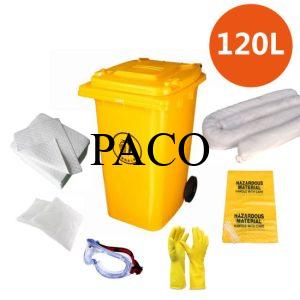
120L – 240L Wheeled Bin Kits: Kept at a central location for larger leaks or tanker discharge emergencies.
3. Essential Components of a Petrol Station Spill Kit
A standard kit in Malaysia should contain high-quality absorbents certified to meet international standards (like ASTM). Key components include:
Absorbent Booms and Socks
These are long, flexible tubes used to contain the spill. They act as a barrier to prevent the fuel from reaching drains or spreading under parked cars.
Absorbent Pads
Flat sheets used to soak up the contained fuel. In an oil-only kit, these pads will float on water while sucking up the fuel.
Granular Absorbents (Optional but Recommended)
For spills on porous surfaces or for “polishing” a surface to remove the slippery residue, granular clay or organic absorbents are highly effective.
Personal Protective Equipment (PPE)
Responders must be protected. A compliant kit includes:
Nitrile Gloves: Resistant to fuel and chemicals.
Safety Goggles: To protect against splashes.
Disposable Coveralls: To prevent skin contact.
Disposal Bags and Ties
Since fuel-soaked materials are considered Scheduled Waste in Malaysia, they must be sealed in heavy-duty bags (usually yellow or labeled) for proper disposal via licensed contractors.
4. Malaysian Regulatory Framework (DOSH & DOE)
To stay compliant, station owners must be aware of the following:
Akta Petroleum (Langkah-langkah Keselamatan) 1984: This act governs the safety of petroleum storage and handling. It implies the necessity of having emergency response plans and equipment ready.
USECHH Regulations 2000: Requires employers to manage chemical hazards. Fuel is a hazardous chemical, and a spill kit is a primary control measure.
Environmental Quality (Scheduled Wastes) Regulations 2005: Used spill kit materials must be managed as scheduled waste. You cannot simply throw them in the regular trash.
5. Step-by-Step Spill Response Procedure
In Malaysia, the “Tier 1” response (site-specific spills) is the responsibility of the station operator. Here is how to use your kit effectively:
Assess the Danger: Check for fire risks. Turn off the emergency stop (E-Stop) button if the spill is coming from a pump.
Protect Yourself: Put on the gloves and goggles from the spill kit.
Contain the Spill: Place the absorbent socks/booms around the perimeter of the spill, especially near drains.
Absorb the Fuel: Place the pads on top of the liquid. For thin films, use granular absorbents.
Clean and Decontaminate: Once the liquid is gone, use a degreaser if necessary to remove the slip hazard.
Proper Disposal: Place all used absorbents into the provided disposal bags. Contact a DOE-licensed collector to pick up the waste.
Report and Restock: Log the incident in your safety book and order a refill for your spill kit immediately.
6. Maintenance and Placement
A spill kit is useless if it is empty or buried under clutter.
Strategic Placement: Keep kits within 10–15 seconds of the most likely spill points (the pumps and the tanker filling point).
Monthly Inspections: Ensure the seal is unbroken. Check that PPE hasn’t degraded in the Malaysian heat.
Training: All forecourt staff and “Station Masters” should undergo a “Spill Response Drill” at least once every six months.